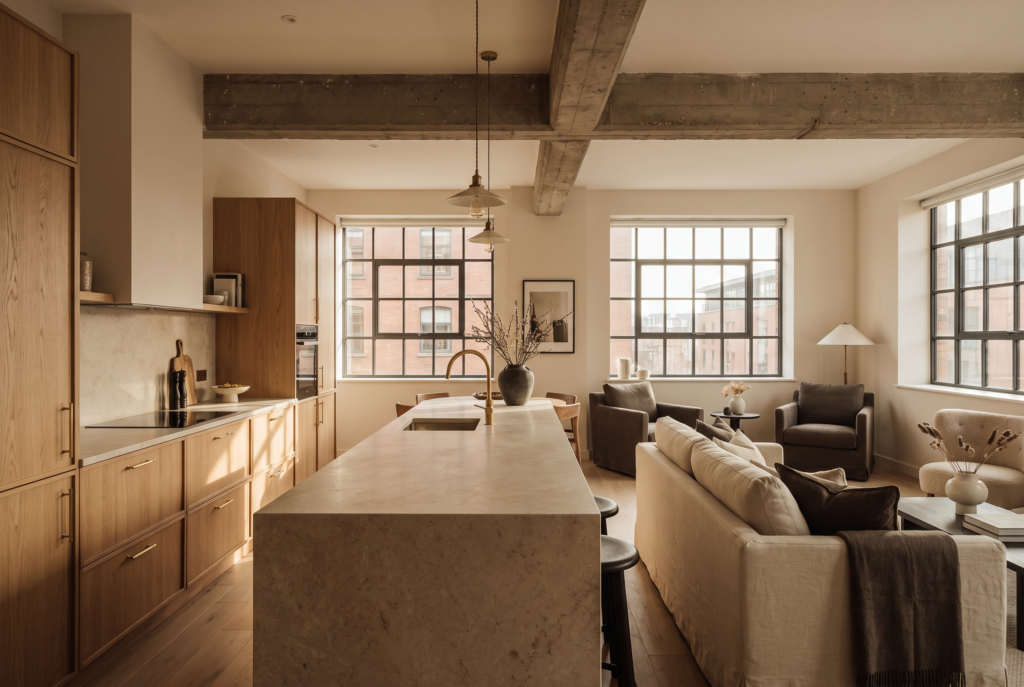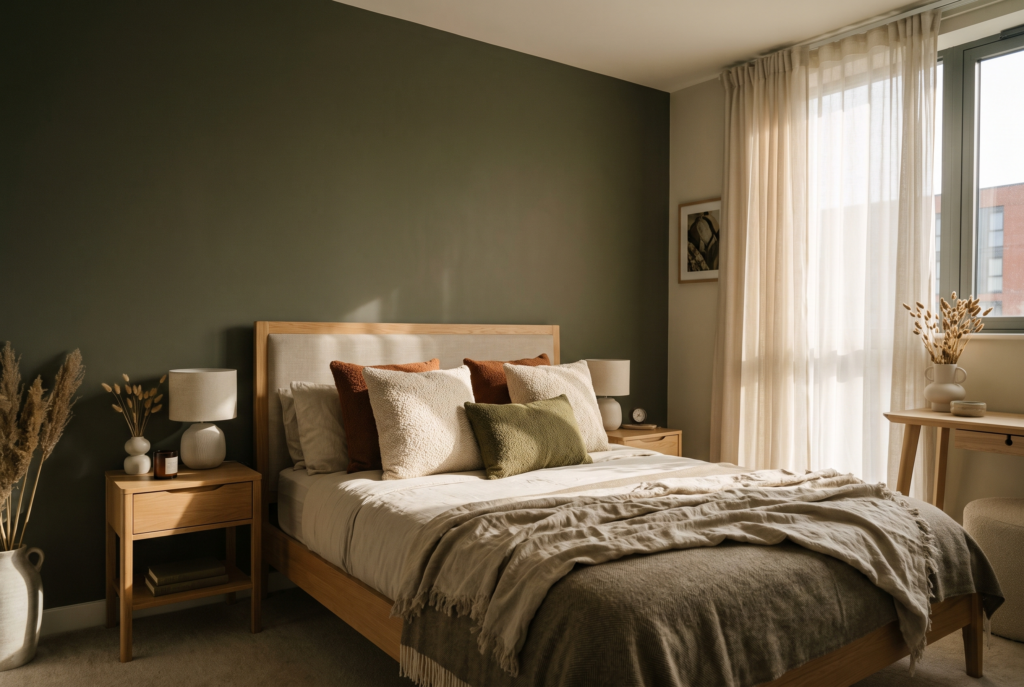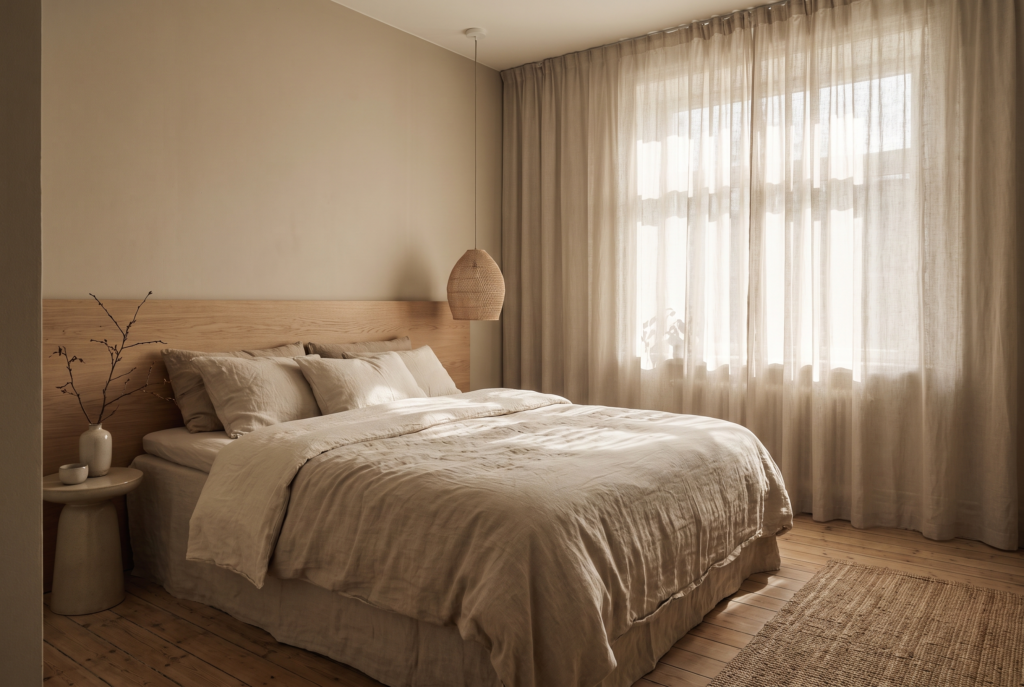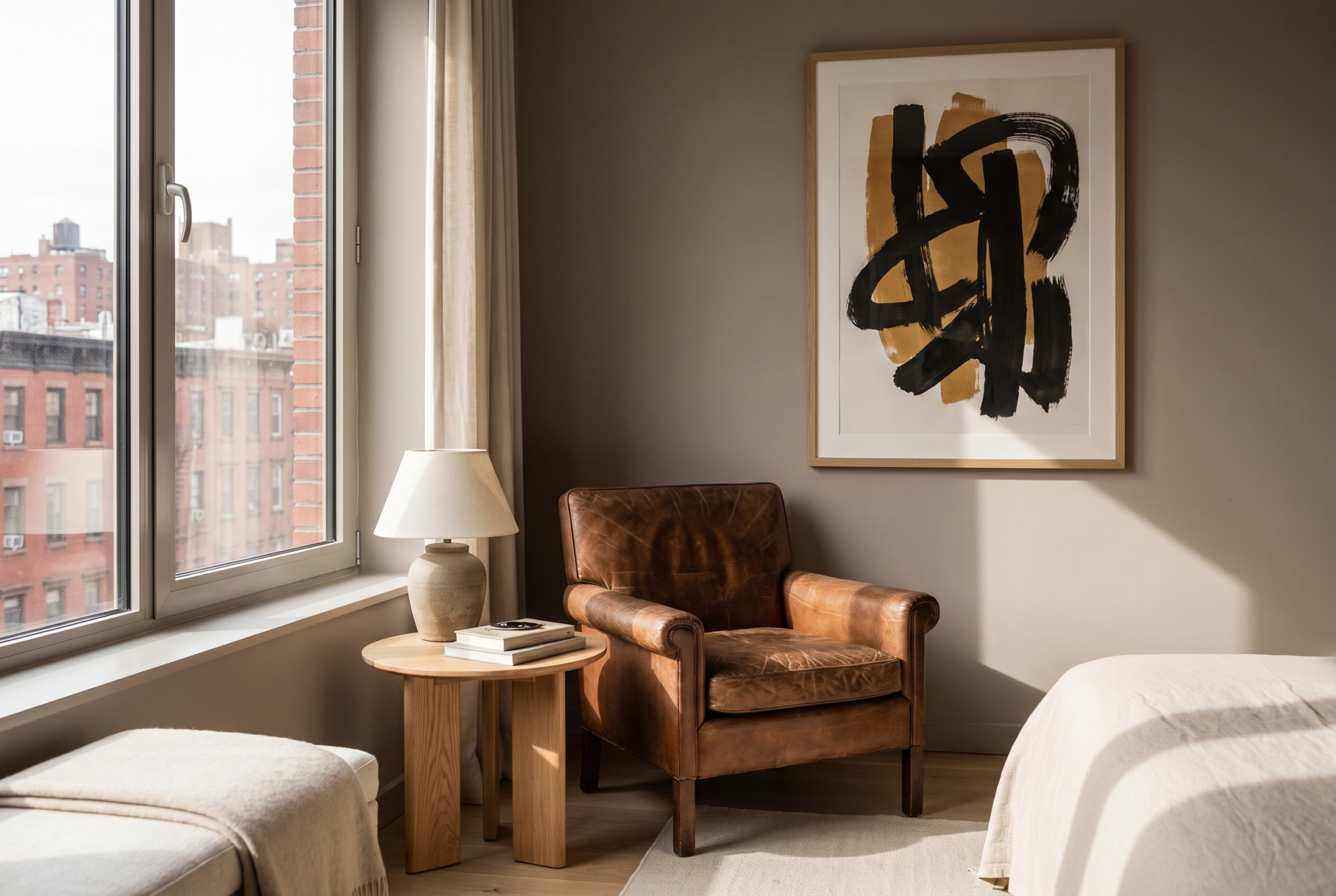
Scroll any city’s listings and the sameness is instant: the same sofa, the same sideboard, the same pendant light. Here’s how to build a property a guest can tell apart at a glance, and why that’s what earns the higher rate.
The scroll test
Scroll any city’s listings and you’ll see it within seconds: the same grey sofa, the same fluted sideboard, the same rattan pendant, the same framed line-drawing of a face. It’s all fine, all safe, and all identical, which means not one of those properties has a reason to be chosen over the others except price. That’s the trap. When your rental looks like everyone else’s, you’ve quietly agreed to compete on the only thing left, and the only thing left is being cheaper. A distinctive property gets picked on merit. A generic one gets picked on discount.
“A distinctive property gets picked on merit. A generic one gets picked on discount.”
Corin Craig Jackson, Managing Director, Heim Studio
1.) Understand why everything looks the same
The sameness isn’t laziness. It’s the honest result of how most rentals get furnished. An owner opens the same three high-street sites everyone else opens, picks the pieces that are in stock and photograph safely, and follows whatever’s currently top of the feed. Every owner doing the same sensible thing produces the same room. The fix isn’t to try harder within that system. It’s to stop sourcing and thinking like everyone else. You can’t look different if you’re shopping from the same shelf as your entire market.
2.) Start from a point of view, not a mood board
The generic listing has no idea what it’s trying to be. It’s a collection of nice things with no argument holding them together, which is exactly why it reads as forgettable. A property that stands out makes a decision before a single item is bought. Is this a warm, textural retreat, or a sharp city base for someone here to work? Playful or calm, moody or light? That decision becomes the filter every choice runs through, and it’s what turns a pile of nice things into a place that feels like somewhere, rather than anywhere.
3.) Anchor it to where it actually is
Most listings could sit in any city on earth. That’s a wasted advantage. A guest booking Manchester wants to feel they’ve booked Manchester, not a showroom that happens to have a postcode. You don’t do this with tourist trinkets on the walls. You do it with restraint: a nod to the building’s era, a local maker’s ceramics, art from someone working nearby, materials that echo the city rather than fight it. A sense of place is one of the few things a competitor genuinely can’t copy, because it’s tied to something real.
4.) Spend the character budget where the eye lands
Standing out doesn’t mean everything is loud, and it doesn’t mean spending more everywhere. It means being deliberate about where the personality goes. Pick the moments that carry the property: the view as the door opens, the wall behind the bed, the corner every photo will feature. Put the distinctive pieces there, a vintage find, a bold light, a real piece of art, and keep the surrounding decisions calm so those moments have room to land.
5.) Mix in something that can’t be re-ordered
The fastest tell of a generic rental is that every item is obviously new and obviously bought from the same three sites. Nothing has a story. The antidote is to break the catalogue with something that can’t be clicked and added to a basket: a vintage chair, an antique mirror, a reclaimed timber piece, an object with age and wear. It doesn’t need to cost much. It needs to be unrepeatable. One or two of these per space is enough to make the whole room read as considered rather than ordered.
6.) Split timeless bones from distinctive layers
There’s a real tension worth naming. Chase novelty too hard and you date fast, which is its own kind of generic, the rental that was clearly done in a particular year. Play it too safe and you blend in. The resolution is to split the two jobs. Keep the bones, the layout, the larger investment pieces, the palette, quietly timeless so they stay relevant for years. Layer the distinctiveness through the things that are cheap to change: the styling, the art, the textiles, the objects. You get a property that reads as considered now and still reads well in five years.
The test
Put your finished listing in a grid next to the 20 it’s competing with and ask one question: could a guest tell yours apart at a glance? If it disappears into the row, it competes on price forever. If it stops the scroll, it earns the rate. Looking like every other Airbnb is the default. Avoiding it isn’t about a bigger budget, it’s about having a point of view and spending your character where it counts.
None of this is complicated. It’s rarely applied with any real discipline, which is exactly why it’s worth saying plainly. Heim Studio designs short-term rental interiors across Manchester city centre, and every decision we make is put to the same test: does it improve guest experience, nightly rate, occupancy or review quality. Follow @heimstudiomcr or visit staging.heim-studio.co.uk for more, and if you want Heim Studio to design your space by becoming a HeimHost client, contact us today at hello@heimhost.co.uk or visit www.heimhost.co.uk.